
In late April, the Lviv prosecutor’s office posted an outrageous story about a 71-year-old resident of the town of Horodok, who spent one-third of his life being a slave of his classmate, a local entrepreneur, Stepan Velychko. He was beaten, humiliated, and made to do hard, unpaid labour. All this had been going on for years in a small town, located 30 km from Lviv, yet the crime has been disclosed only recently.
NGL.media visited Horodok to find out how it happened and who Stepan Velychko is.
Slavko and Stiopa
Horodok, a town of 16 thousand residents, met us with a cold wind, unseasonable for spring, and bustling street traffic.
A loud statement of law enforcement agencies about Stepan Velychko, who had sweated his classmate for over 20 years, was the talk of the town. The town’s residents know this name well, since 71-year-old Velychko owns the local market and several funeral services.
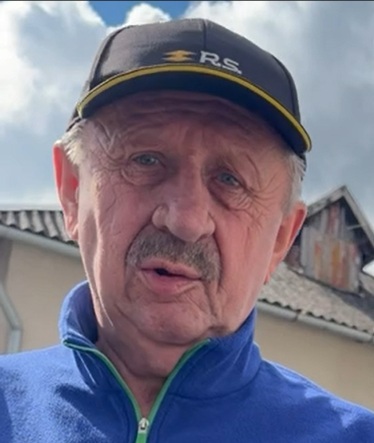
Stepan Velychko (a photo by NGL.media)
And Stepan Velychko is also known as a man who can lend money.
“In the 1990s, he had a nickname Plaster, because his arm was broken, he had a plaster and on it he would write down how much someone owed him. He had money, he lent it to people and then made them pay back the amount that was several times higher. He would lend you 500 dollars and demand to pay 5,000,” Yuriy Chernyk, his neighbour, told us. “Even my grandfather used to be afraid of him, because he used to drive a black Volga. And generally, he is still feared here for some reason.”
A strange feeling that Stepan Velychko is some kind of a made-up figure to scare children doesn’t leave me throughout my stay in the town. “I could tell you a lot about him, but I’m afraid,” these were the answers I frequently heard.
Velychko owns one of the two town’s markets, which is located in the centre. In the market, people give rather positive reviews about the owner, for instance, they note that he sets acceptable rent prices for entrepreneurs. And as for the accusations of labour slavery, their answers are restrained.
“He used to come here, that Slavko, he used to open and close the market, clean something, and help. We saw him here all the time. He was definitely not chained up, but we don’t know any details,” says one lady, the owner of a grocery.
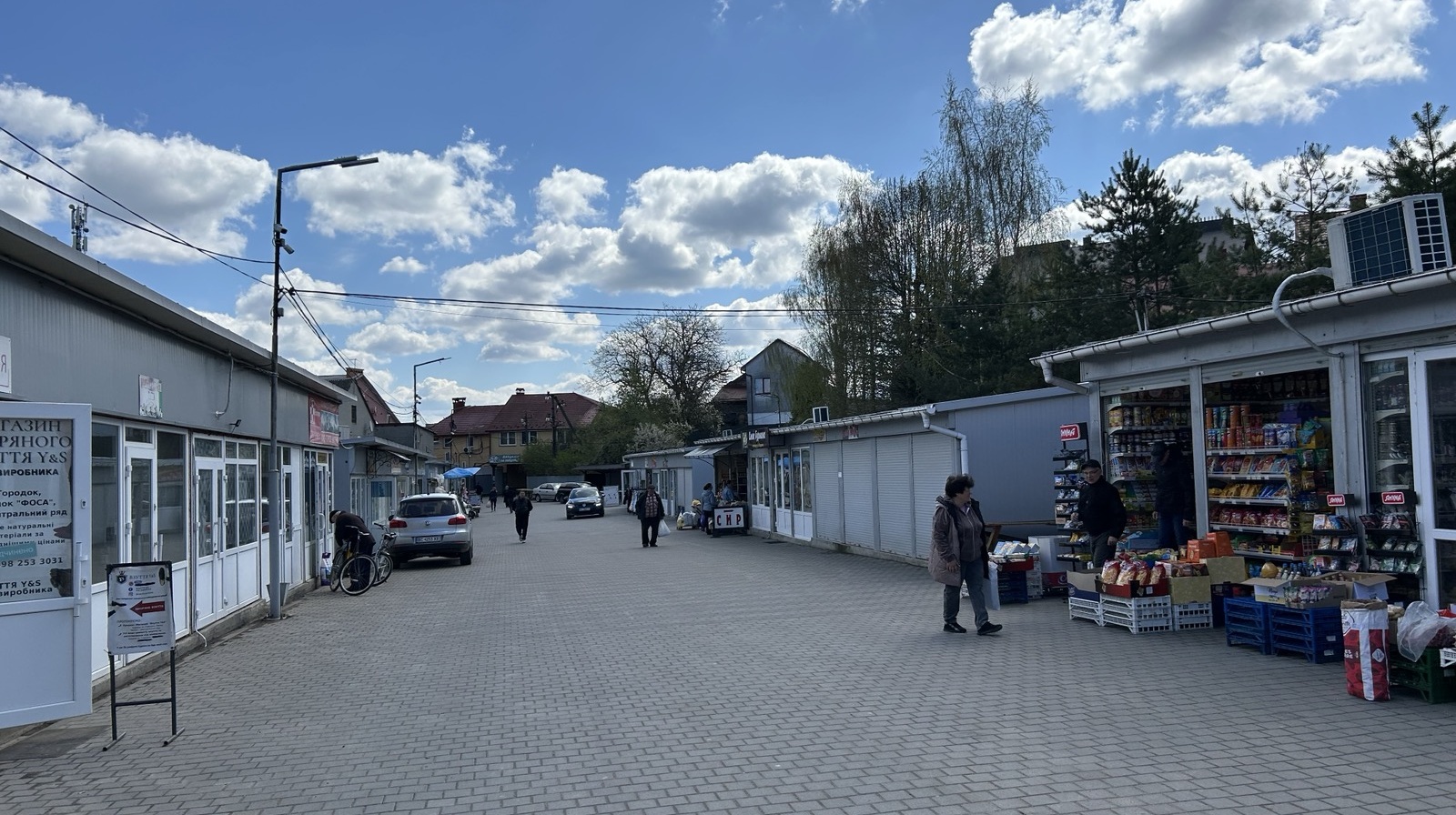
Fosa market in Horodok, which belongs to Stepan Velychko (a photo by NGL.media)
Slavko, mentioned by the lady, is 71-year-old Yaroslav Povoroznyk, who, according to the prosecutor’s office, was dragged into labour slavery by Velychko in the early 2000s. They are the same age, classmates, grew up in the same street. But while Velychko succeeded in getting rich, Povoroznyk was less fortunate. He has lived his entire life in the same house with his mother and younger sister.
His sister was the one to get him enslaved.
“Slavko used to work at the factory, but he was fired for drinking. Because of that, he started drinking alcohol more and became ill-tempered,” Olha Povoroznyk, Yaroslav’s younger sister, says. “I know Stepan [Velychko] since childhood, I knew that he helped people. So I asked him for help. He said he had a land plot in Rodatychi a village, 10 km from Horodok. Slavko liked it there, so [Stepan] took him to his place.”
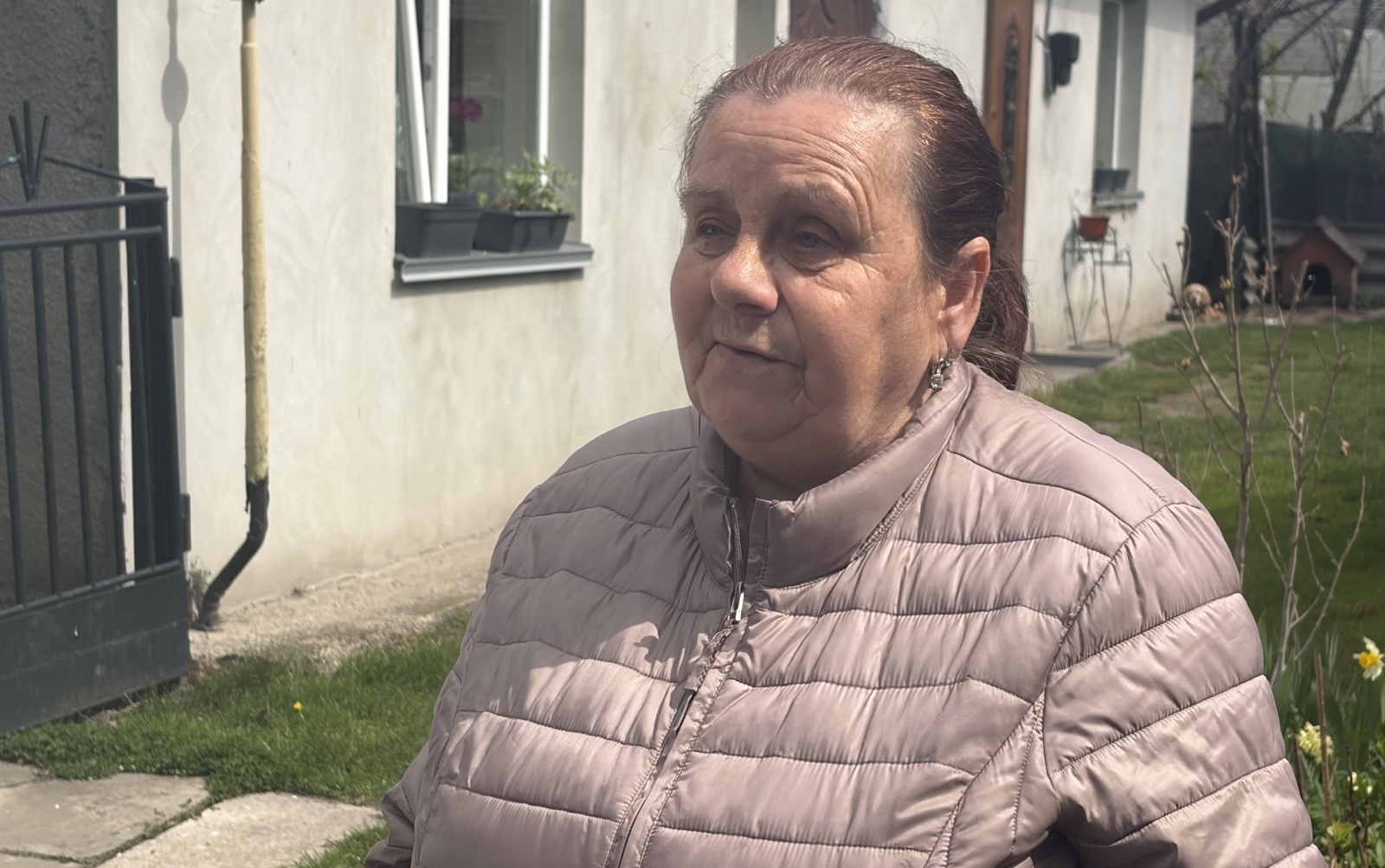
Olha Povoroznyk, a younger sister of 71-year-old Yaroslav, a victim in the case of labour slavery (a photo by NGL.media)
According to the investigators’ data, Stepan Velychko has been using his classmate for different jobs for 23 years in exchange for food and a roof above his head. Yaroslav would build the house, cut wood, hay, harvest vegetables and the like.
“While in the early years, the hired worker really could move around freely, visit his sister, and leave his employer’s premises at will, with time he was deprived of these basic human rights. At the same time, for all his toil, he received only food, sometimes ready meals, cigarettes, and a roof above his head. He didn’t get any money for the work he did,” says the official press release of the prosecutor’s office.
In summer, Yaroslav Povoroznyk would work in Rodatychi, maintaining a large household and working in a pigsty. He slept not in a house, built there, but in a site container in the territory of the estate. For winter, he would come back to Horodok, where he worked in Velychko’s household, and slept in the maintenance building.
Povoroznyk’s sister insisted that she had constantly been in contact with her brother and that he had never complained about his living conditions. She is convinced that her brother was better off being hired than he could have been at home. “He didn’t work much, because he couldn’t. He could have done some things, like he could have swept some place. He had to help Stepan because Stepan helped him too. But he didn’t do hard labour because he didn’t have enough strength. He did everything at his will,” Olha Povoroznyk believes.
Yet the neighbours claim that actually Yaroslav Povoroznyk toiled a lot. “I was growing up in the neighbouring house, and used to see that Slavko my entire childhood. We used to call him ‘a slave’ among ourselves, because he toiled a lot. He would weed the yard, he would do something all the time, otherwise Stiopa would scold him. Yet we thought that he was being paid at least something,” Yurii Chernyk, a neighbour, says.
“Otherwise, you can’t educate”
Stepan Velychko lives in a solid three-storey house with maintenance buildings. One of his funeral services is nearby. He can move around town freely, because his restrictive measure envisages only night house arrest.
“You can ask me anything you want,” says Stepan Velychko at once. He denies all the accusations and believes that the police investigation was initiated at someone’s order.
“They [the police] came on Saturday, and kicked his sister, who had brought his things, from the territory. So pushy, you know. His sister brings him food, takes his dirty clothes. She had to sit on a bench here [while the investigative actions were ongoing]. They recklessly stole a person… A sister doesn’t know where her brother is,” says Stepan Velychko. “Frankly speaking, I am so embarrassed. The entire Horodok knows me. I have earned respect and authority. I am embarrassed, I have never dealt with anything like this in my 72 years.”
He is convinced that the police are forcing Yaroslav Povoroznyk to give false testimony against him, including cases of violence.
“If I felt that I am to blame for anything regarding Slavko, I would give my soul to him. He knows that. If they let him out now, he would stand right here beside me and weep,” Stepan Velychko is convinced of that.
As for the telephone conversations, posted by the prosecutor’s office, in which he is aggressive towards his former classmate, Velychko calls them “upbringing”.
“I had to shout. I would shout at him, and he wouldn’t go to buy alcohol in the village, he would stay there, do something, weed some herbs. But I had to. I would shout like that, and it is quiet for two-three hours for me here. Otherwise, you can’t educate,” Velychko explains.
Several local residents told me that, besides Povoroznyk, other people used to work for Stepan Velychko in the course of several decades, and they worked for him without any payment, usually these were socially deprived, poor people.
“There used to be Ivan, who also lived there and worked for Velychko for years. There were other men, but none stayed as long as Slavko did,” his neighbour, Yurii Chernyk, recalls.
“People have never worked for me [free of charge]. This is some false information. If anybody sometimes helped me with something, I always paid. I don’t owe anything to anyone,” Velychko responds.
A house in the village and the maintenance buildings
According to the data of the investigation, in winter, Yaroslav Povoroznyk mostly lived in the maintenance building near Velychko’s house, and with the coming of the warm season, he would move to Velychko’s farming household.
“During the cold season, he [Yaroslav Povoroznyk] lived in the room of the maintenance building near the businessman’s three-storey house. It was heated by a wood-burning stove. However, because of a single door which doesn’t close tight and leads right into the street, it was impossible to keep the room warm. There was no water supply, the floor was made of cement, there was no separate place to cook, his toilet was a stinkhole, enclosed by one-meter-high walls on three sides,” the prosecutor’s office claims. “As for the territory of the farm, the man lived in a metal container without any heating, without any windows, without electricity, without water or sewage system, and without any possibility to cook.”
The farm, mentioned in the statement, is located in the village of Rodatychi near Horodok. It is a large territory at the lake with enormous orchards nearby. A two-storey house is built there, and there is a very old metal container and a pigsty close to it. Stepan Velychko insists that Yaroslav Povoroznyk lived in the house, but the latter told the investigators that he actually lived in the metal container.
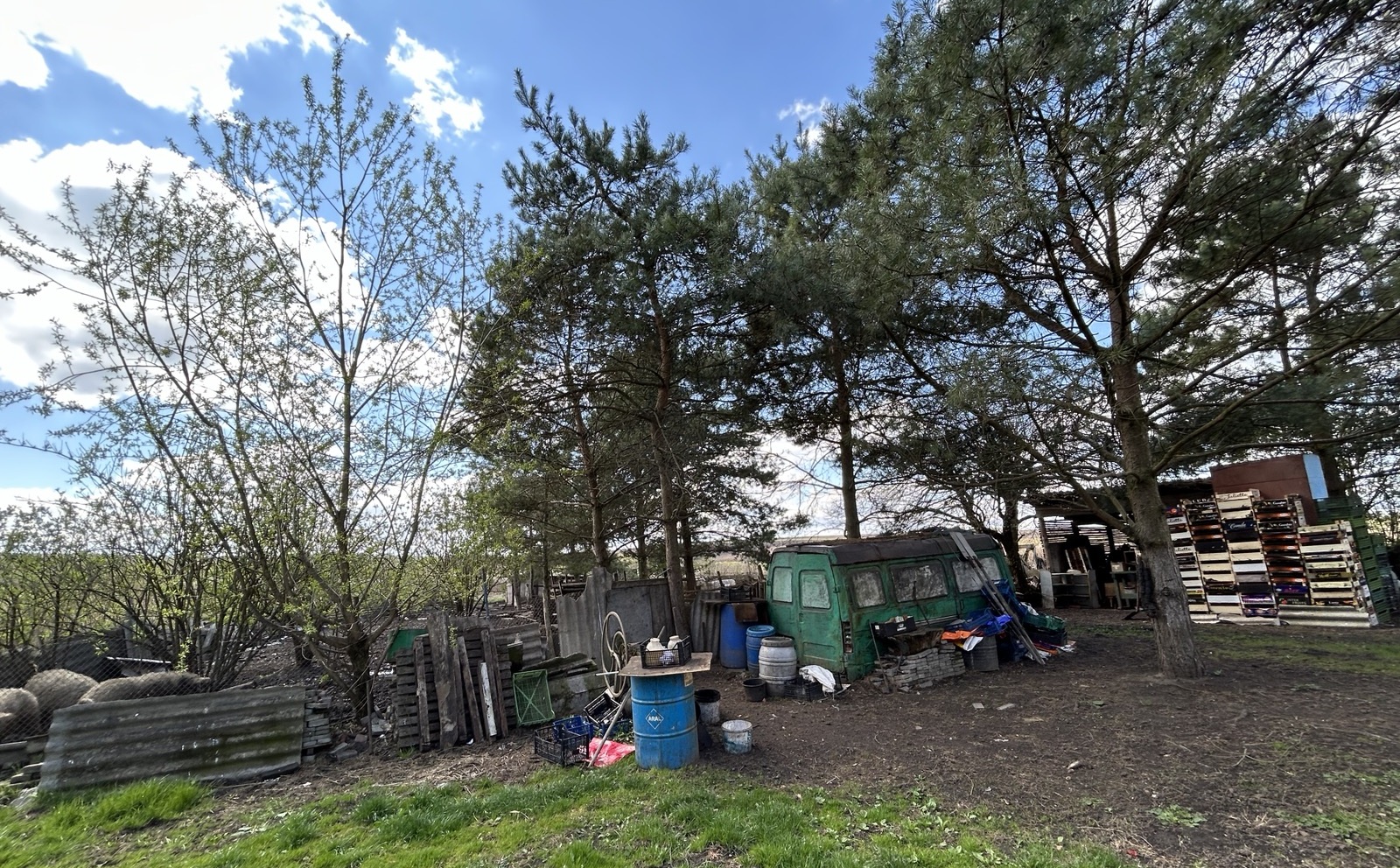
A metal container in the territory of the farm in Rodatychi, where Yaroslav Povoroznyk used to reside (a photo by NGL.media)
“At first, he used to live in such a nice military box van, and when the house was built, he moved in. We took that box van to Horodok. And that thing, shown to you by the police, is not our container at all,” Stepan Velychko insists.
Stepan Velychko and Olha Povoroznyk claim that the land plot with the house at the lake in Rodatychi was registered in her brother’s name. But it’s not true. Velychko’s lawyer sent NGL.media the permit to register the land plot for the building of a house, which was really issued by the Horodok town council in the name of Yaroslav Povoroznyk in 2021. However, the land plot wasn’t registered officially, and it seems that the house was built without any registration. As of 2026, no property has been registered in Povoroznyk’s name.
After some requests to clarify this topic, Stepan Velychko did admit that there are no documents for that property.
“The technical documents have been prepared now. We still need the decision of the session about the transfer into ownership. However, during martial law, there is a moratorium on land privatization. After this, it will be possible to legalize the house,” Velychko told NGL.media.
A town of barbers and helplessness
In addition to the local Fosa market, Stepan Velychko also owns a funeral service and a barber’s shop in the territory of the local bus station. There was a time when Stepan Velychko worked as a barber, which he is still proud of.
“I am a champion of the Lviv region in barber’s services. My barbers provide services to the Verkhovna Rada. Have you seen Lytvyn’s haircut? […] That’s the sphere I used to hang around. Planes would land here for me, generals would fly in to get a haircut,” Stepan Velychko recalls his old times.
Some of the local barbers used to work for Velychko. When I try to inquire about their former boss, I mostly get either silence or complaints in response.
“He wouldn’t register anyone to work officially, people could work for him for 20 years without getting any labour record. He wouldn’t let them work normally, to earn, he could shout and scold them. He said that if the tax police came with the inspection, they were to tell them to fuck off right away. So, whenever there was a chance to get a job at any other place, girls would leave,” his former employee says anonymously.
Most of her colleagues keep silent and say that they are afraid. It is actually hard to determine the nature of this fear, because it is based on rumours about Velychko’s impact in the gangster 1990s and tales about his being unpunishable.
– Why are you afraid of Velychko?
– Because I have a family, he can do something with us.
– What exactly?
– There is a lot he is capable of.
– Of what exactly?
– Ask other people, we will tell you nothing.
This is a typical dialogue with people who dealt with Stepan Velychko. Despite the repute as a local wrongdoer, he has never featured in any criminal cases, which was confirmed by the police. So the story with Povoroznyk became the first registered episode of criminal activity in his life.
It seems like the Horodok town council is also afraid of Stepan Velychko.
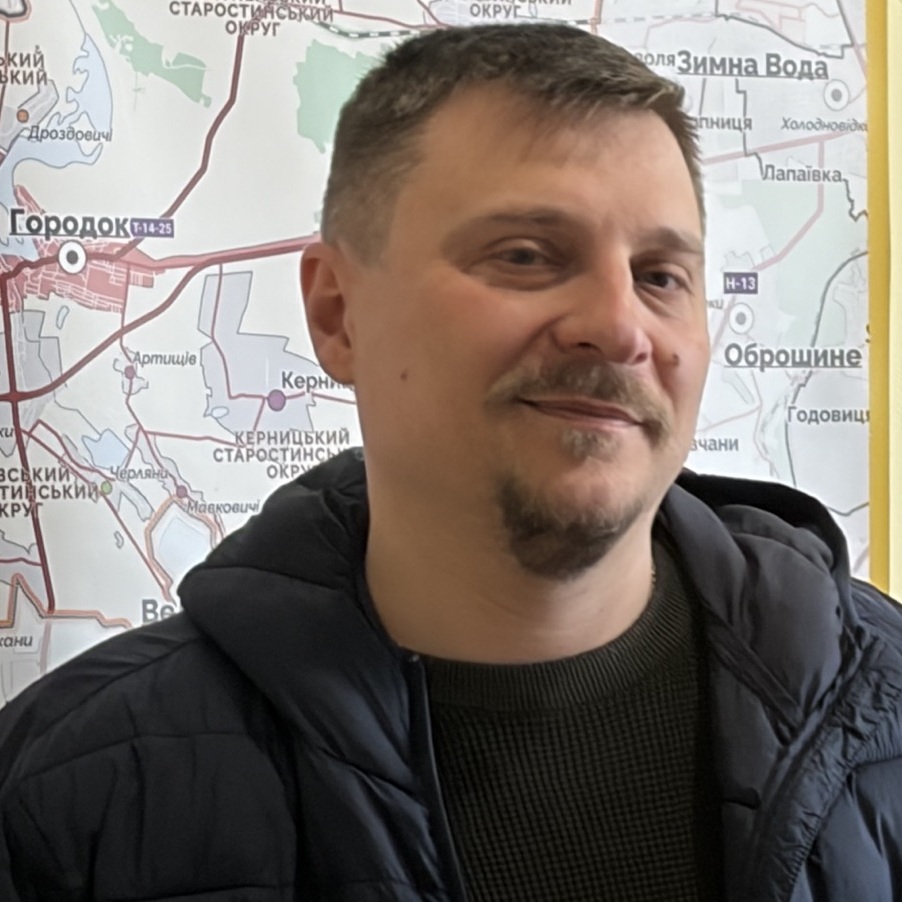
Mykola Lupii, the secretary of the Horodok town council (a photo by NGL.media)
“He quarrels with everyone, he has conflicts. He can come and throw some rubbish in someone’s yard, block the road, if he doesn’t like you. As for the recent deeds, in our cemetery, he organized funerals, and one grave got off on the road. The head of the cemetery drew his attention to it, we contacted him, but he didn’t care… This situation hasn’t been resolved at all,” Mykola Lupii, the secretary of the town council, complains.
However, sometimes the local authorities can impact him in some ways.
“Once he wanted to install the statue of God’s mother in the traffic area near his market. Usually, we are all for it, when a person wants to make the territory nicer, to install some benches. But this is a traffic area, used by people. We didn’t let him do it, and for now, things have calmed down somehow,” the representative of the town council says.
A criminal investigation
In September 2025, the police searched Stepan Velychko’s house and took Yaroslav Povoroznyk with them. Seven months later, Velychko was served with a notice pursuant to the article on exploitation of humans using violence (Part 2 of Art. 149 CC). Not long before being served with the notice, on March 5 of this year, Stepan Velychko re-registered all his real estate in the names of his relatives and acquaintances.
He believes that one SSU official ordered this case to be initiated against him, but he refuses to say his name.
“There was one boy Volodia, he used to help me, and his father worked in the SSU. He set his kiosk at the entrance of the market without any permission and wanted to do his trade in the traffic area. I drew his attention to it. I didn’t know he was from the SSU. And it all came from there…” Stepan Velychko is convinced.
His criminal case is currently under pre-trial investigation. Stepan Velychko is a suspect, and Olha Povoroznyk, the victim’s sister, is a witness in the case. As for the 71-year-old victim, he is at the geriatric home, the address of which is not disclosed to journalists or parties of the case. So we didn’t succeed in getting to talk to Yaroslav Povoroznyk.
“The victim’s health condition is currently evaluated as satisfactory; he has been provided with all the required medical assistance. At present, he is under surveillance of specialists and periodically has relevant medical examinations to maintain his health,” the Lviv police informed NGL.media. “In future, the victim will be provided with the required support, including a place of residence and social support in the specialized institutions for people who have been victims of human trafficking.”
Author Kateryna Rodak in cooperation with Natalia Onysko, editor Oleh Onysko, translation Nelya Plakhota, cover Viktoria Demchuk
