After the beginning of the full-scale war and implementation of international sanctions, Russian users have spent about USD 546 mln on video games in Steam, including over USD 31 mln that was spent on the services of middlemen who help them bypass sanctions.
The international sanctions were intended to limit direct transactions with the RF, thereby isolating Russian users of video games. However, a separate segment was quickly formed in Russia using sideline services and alternative mechanisms, which still bring Russian roubles into the global gaming industry.
Steam after sanctions: there is access, but there is no way to pay
Steam online platform is an undisputed leader in the world of computer games. Every month, it is used by more than 130 mln people, this is the main global online shop for computers, which facilitates almost 75% of all digital sales of computer games.
The international financial sanctions, imposed after the invasion of Ukraine, had a considerable impact on the Russian segment of this market. The platform itself remained accessible to Russians – they could log in to their accounts, play previously purchased games, and communicate in chats, but they lost the possibility to buy new games.
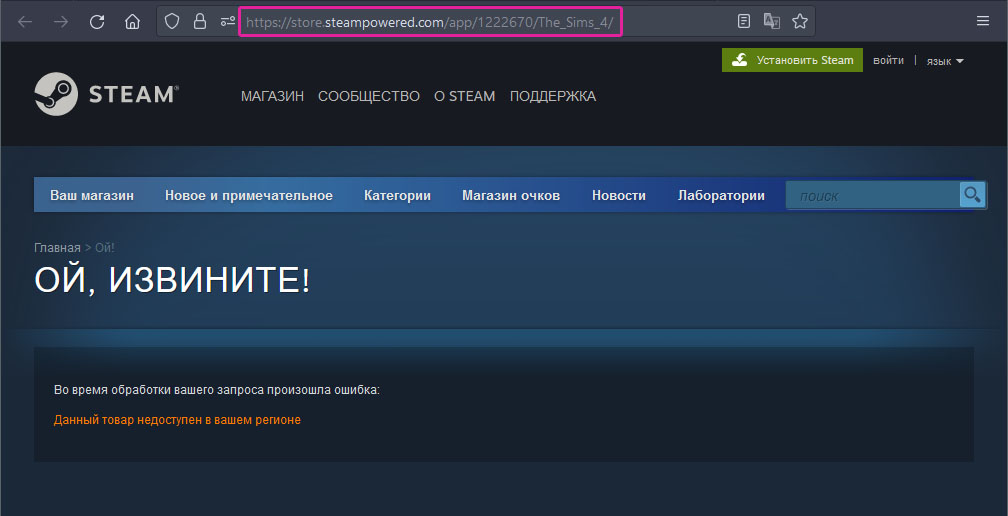
At the end of February 2022, the video game Elden Ring, one of the most anticipated releases of the year, came out, and Russian users discovered that the usual scheme of buying games on Steam stopped working. While registering the transaction, the system either doesn’t accept the payment or shows the message about restrictions.
The restrictions are related not to the specific release, but to the platform in general. There is still access to the content, but the basic function – purchasing – no longer works.
Confused players started sharing their various tips: how to add funds to one’s wallet, how to change the account region, how to buy via other countries or middlemen. At first, these were separate comments in the forum, but later they transformed into ready solutions.
Bypassing instruments: how users still buy games
Since the beginning, one of the basic schemes was a change of the account region via Kazakhstan. But VPN proved to be insufficient here, since Steam changes the region only after the actual payment using the currency of another country. Then Russians started using the Russian payment system QIWI: they added funds to their accounts in roubles, converted them into Kazakh tenge, and made payments via Kazakhstan. As a result, Steam perceived them as Kazakhs.
A few months later, QIWI even simplified the process by adding direct payments to Steam without the need to create a wallet in tenge manually. Yet, in February 2024, QIWI lost its banking licence and the users had to start looking for other variants.
That’s approximately when there appeared a way which doesn’t require any banks at all. There are virtual items in video games – costumes for characters, weapons, and accessories. Gamers call them “skins”. They don’t impact the game, but are status markers like designer clothes or collectible sneakers. Some are worth thousands, and the rarest ones – hundreds of thousands of dollars.
This is what the scheme relies on: using roubles, Russian users buy skins on other marketplaces and re-sell them inside Steam for the internal currency of the platform. The money goes straight to the virtual wallet without any banks, conversion or accounts of other countries. The sanctions against Russians don’t affect such payment at all.
External marketplaces: how does the user’s route look like?
After restrictions, a separate market of middlemen emerged taking payments and access of Russians to games on their shoulders. These were external platforms where digital goods were sold: games, keys, account replenishments, and access rights. The most frequently used ones are specialized marketplaces like Plati.Market or FunPay.
According to the web analytics data, FunPay has over 28 mln visits per month, and Plati.Market – about 9 mln. FunPay positions itself as a commodity exchange using the player-to-player principle, where the main emphasis is made on services and internal game values: account boosting, currency, and ready-made accounts, whereas Plati.Market is a classic automated marketplace, where ready-made digital products are sold, for instance, game activation keys, codes for adding funds to wallets, etc. Together, they cover different parts of the same market: from direct access to games to services that allow for bypassing the restrictions. That’s why these are the platforms mentioned in discussions as the main entry points for users.
Here, a Russian user can buy practically everything he used to buy directly in Steam, just via the third party. These sites work as usual marketplaces: there is a catalogue, search, ratings of sellers, and feedback. The difference is: not physical goods, but access to games for internal platform currency are for sale.
How I bought an entry ticket to the Russian Steam
To check how these schemes work in practice, I decided to personally take the entire way of a user who is trying to buy a game in Russia.
For my experiment, I chose FunPay marketplace. Contrary to the other popular marketplace Plati.Market, where the payment transaction often requires entering banking card data directly into the payment forms on the website, and the envisaged option of communicating with the seller often doesn’t work due to the complete ignoring of messages, FunPay allows contacting sellers directly via chats. Since I had no desire to enter my card details on unsecured resources, the possibility of an actual dialogue and selecting the payment method became a decisive factor.
My first step was to purchase a new Steam account, which has already been registered by the seller in Russia’s territory. It gives the possibility to see the prices directly in roubles and to have access to the goods for the Russian market. This account costs only USD 0.25. But there are restrictions for FunPay: the minimal amount for replenishing the account balance using the card is USD 10. As soon as I paid this money, the seller gave me the login, password, and complete access to email, with which this profile was registered.
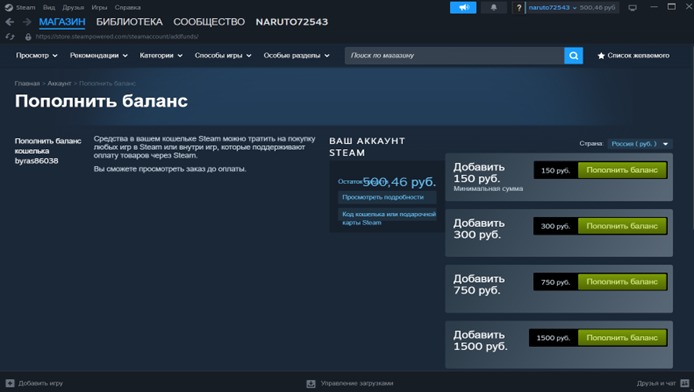
The Russian Steam account of the NGL.media journalist, bought on the intermediary platform, FunPay (a screenshot)
Then I had to add funds to the internal wallet (Steam Wallet). It works as a mobile phone account – we add funds, and then spend them on any games on the platform. I ordered the replenishment service for 500 roubles. The process turned out to be maximally simplified: I just indicated the login of my new profile in the chat with the seller. Several minutes later, the money appeared in the account. It proved that there are working channels of adding funds directly to the Russian accounts, bypassing the official restrictions.
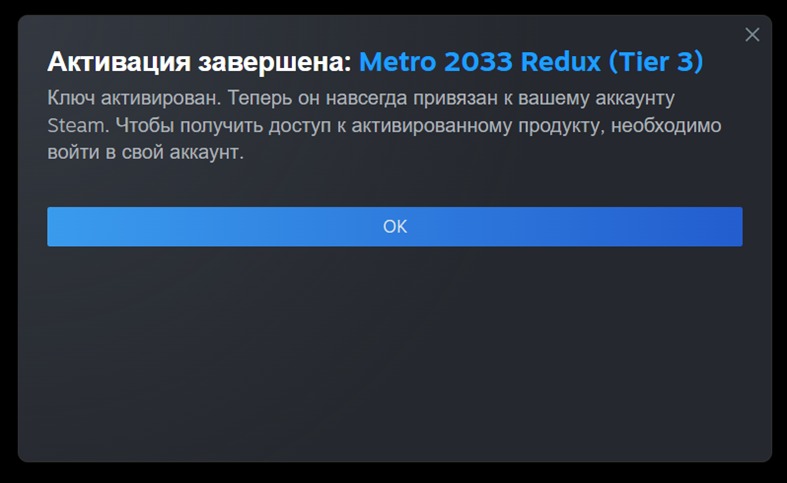
The last stage is the game purchase using the digital key. This is a unique code, after inputting which the game is forever placed into the user’s library, accessible from any computer. For my example, I selected a Ukrainian game, Metro 2033 Redux, since its producer, Deep Silver company, stopped its sales in Russia as far back as 2022. This position was later confirmed by the mother company Embracer Group, which made an official announcement about the complete suspension of its activity in the RF and its leaving the local assets.
Yet, this game is still accessible to Russians on the shadow market. I bought the key for USD 2.29. The seller asked precisely whether my account belonged to the RF region. This is important because keys often have geographic limitations: a code for the Russian market doesn’t work in Europe or the USA. After code activation, the game was immediately added to my library. So the external marketplaces help receive access to the products officially removed from the Russian shop by the developers themselves.
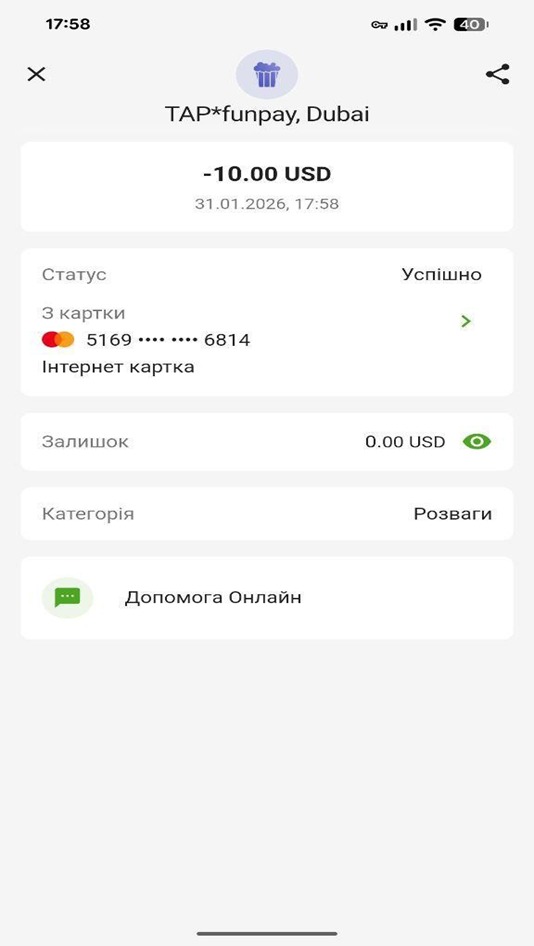
I saw the most peculiar things in my banking receipt after paying for the services in FunPay. Although I interacted with sellers, oriented to the Russian market, in documents, the payment wasn’t related to the RF at all. When I was using the Ukrainian card, the transaction was reflected as a payment in Dubai, the United Arab Emirates. It allows the platform to accept international payments and avoid restrictions, imposed on direct transactions to Russia.
This structure allows FunPay to remain invisible to financial regulators and still serve the Russian users. To understand the figures behind it, I analysed the legal documents and registers of the related companies.
How do the mechanisms of bypassing restrictions work?
The analysis of the documents and open registers demonstrates that the platforms, serving the Russian gaming market, use a wide-branched network of legal entities in different countries. It allows them to accept international payments and avoid financial restrictions, imposed on direct transactions to Russia. The main aim of this structure is to create the facade of international business for Western banks and payment systems, not to block the transfers which actually support the Russian gaming retail.
The main strategy is regular re-registration of companies and change of jurisdiction – from Georgia to Kazakhstan, to Great Britain and off-shore zones in the Seychelles. This fluidity of legal addresses lets platforms stay within the grey zone.
The key figures in this structure are Mykhailo Marchenko, a Russian, who is FunPay founder and the trademark owner, and Natalia Yermolayeva, an RF citizen, who is a director or responsible person in the foreign branches of the platform. This model ensures non-stop input of finances from users from the entire world, despite the official exit of international companies from the RF market.
Contrary to the network of intermediary companies, used by FunPay, Plati.market marketplace works via direct registration in the offshore jurisdiction. This platform is registered in the Seychelles, which allows it to accept international payments. For the global financial system, the transactions benefiting the Seychelles legal entity have no direct connection to the Russian jurisdiction, which allows it to bypass banking restrictions on direct transactions with Russia.
This model lets the platform act as a middleman in the sale of gaming products and services of adding funds to the accounts, officially restricted by the producers for the Russian region. The offshore status of the company ensures access to the services of international payments via which the payments from the banking cards of different countries pass through.
The bypassing money: how much do middlemen earn?
To imagine the actual scale of the shadow gaming market, one should look at the sales numbers of one of the most successful releases last year – Monster Hunter Wilds video game, which was sold in over 10 mln copies during the first month alone.
According to the reports of the VG Insights analytical platform, the share of Russians in such projects is about 6.5%. So, Russia covers about 650 thousand copies of Monster Hunter Wilds for the basic international price of USD 69.99 per copy – a total of USD 45.5 mln. Of this amount, Russian middlemen received about USD 3.5 mln, while Steam received USD 13.6 mln (30% of the total sale proceeds).
But financial benefit is only one side of the coin. In March 2026, a video game Ukrainian Warfare: Gostomel Heroes from the Russian studio Cats Who Play appeared on Steam, where users are suggested to play on the side of Russian paratroopers during the battles for Hostomel in February-March 2022.
Despite massive complaints of Ukrainians and evident distortion of reality, the response of Steam was minimal – the game wasn’t removed, it was just made inaccessible from Ukraine’s territory. The propaganda content remains open for the rest of the world, including Russia.
Steam company didn’t respond to NGL.media’s request to give their comments on this article.
Author Anastasia Rashchenko, editor Oleh Onysko, translation Nelya Plakhota, cover Viktoria Demchuk